Okinawan Longevity "Pearls'...My Experiences from Honolulu to Okinawa

Kirk's video overview of his interview with Dr. Bradley Willcox (9:57 min)
Kirk's Interview with Bradley Willcox, MD, in Honolulu, Hawaii (video or audio min 50:37)

Kirk Hamilton interviews Bradley Willcox, MD
regarding the "old" and "new" Okinawa Centenarian diet still supporting remarkable longevity and function compared to the modern Okinawan diet which is high in processed foods, more processed carbohydrates, more animal foods and higher intakes of inflammatory types of fat resulting in an epidemic of chronic diseases.

Specific topics discussed are types and amounts of carbohydrates consumed by the Centenarians in the early years which was mainly sweet potato and soy bean foods versus the increased consumption of rice and bread products presently; the use of soy and canola oils for cooking presently compared to the very low-fat diet coming from pig lard in the early Centenarians; significant consumption of soy products such as tofu, edamame and miso by early and current Centenarians; daily consumption of small quantities of fish products or meat such as pork, which is currently increasing, but still consumed more as a condiment than a significant portion size; large amounts of colored vegetables such as goya (bitter melon); the consistent daily consumption of seaweed throughout all the years; the higher amounts of herbs and spices, including turmeric, in the Okinawan cuisine compared to traditional Japanese cooking; and the small but increasing amounts of dairy products being consumed.

The elders are still very physically active. Walking, gardening, farming, fishing, etc... Try getting up from the floor in a cross-legged sitting position 10-20 times per day at the age of 90 plus! I can't even get my 70 plus year old patients up once every half hour from their chairs during a television advertisement!

____________________

Interview Summary ...

Dr. Willcox's Background...

Bradley Willcox, MD, is an internist and gerontologist at the Department of Geriatrics,  University of Hawaii, John A. Burns School of Medicine, Kuakini Medical Center.  He is co-principle investigator of the Okinawan Centenarian Study and co-author of the books "The Okinawa Program" (2002) and "Okanawa Diet Plan" (2005) with Makoto Suzuki, MD and brother Craig Willcox, PhD.

Dr. Bradley Willcox has been studying centenarians since 1994 working with Makoto Suzuki, MD creator of the Okinawan Centenarian Study (1976) and his brother Craig Willcox, PhD.

How Bradley Willcox, MD Got Interested in Longevity and Okinawan Health...

He always had an interest in sports and health and in 1992 went to University of Toronto Medical School.  Prior to his first year in medical school he went to Japan and became very interested in the health and longevity of Japanese people. In medical school he worked with David Jenkins, MD, PhD (creator of the Glycemic Index and Dietary Portfolio) and Craig Willcox, PhD (twin brother, Okinawa International University), on a project studying prostate cancer and diet in Japanese men who had an 80% lower incidence of prostate cancer than men in North America.

They compared Japanese men in Canada to those in Japan. He discovered a 105 year old Japanese, Okinawan, who was Canadian. He was always very active and it was difficult to recruit him for the study because he was always doing something. His wife was 90 plus years of age.

It was noted that the health of Okinawan, Japanese was better than the general Japanese population. He did a research exchange in 1994 and he and his brother, along with Dr. David Jenkins, went to study Okinawan longevity.

He and his brother met Dr. Makoto Suzuki, a cardiologist and geriatrician from Tokyo. Dr. Suzuki came from Japan to Okinawa to help with rural health when Okinawan went back to Japanese control from U.S. control in 1972. He found the elder Okinawans were extremely healthy. He became very interested in the differences in the health of the Okinawans versus other Japanese. The Okinawans were the healthiest of all the Japanese. Dr.Suzuki started the Okinawan Centenarian Study in 1975-76.

Okinawans - The Healthiest of All Japanese...

Okinawans were the healthiest from all of the 47 prefectures (or states) in Japan. There is an improving health gradient from the northeast to southwest in Japan. Those who live in the northeast are the least healthy because they consumed more salt and had more hypertension. As you go more southwest the population becomes more healthy, of which the Okinawans are the most healthy. They have two growing seasons. Eat more vegetables. Eat less salt and they live the longest. Since the 1880s the Okinawans have had higher numbers of 80 to 100 year-olds compared to the rest of Japan.

Japanese Standing on Longevity...

Japan didn't become the world's longest lived country until the 1970s and early 1980s when they past the Nordic countries, Sweden and Norway, because they previously had a higher incidence of stroke and hypertension, and, they had more infectious diseases (i.e tuberculosis, parasites, etc.) because of a poor public health system.

They did not develop a good public health system until after World War II and then got rid of infectious diseases, parasites and reduced infant mortality and stroke rates (by controlling salt intake and hypertension), then the Japanese', and Okinawans' in particular, with their good lifestyle, exercise and dietary patterns increased Japan's overall life expectancy, and then they became the country with the longest life expectancy.

Birth Cohort Effects of Japanese Health...

The "early" elders who were born before WWII, were the first cohort of the 20th century. They had very healthy diets and living habits. They survived to middle age, then got good health care and this propelled them to the top of the longevity charts around the world.

Younger Okinawans Lifestyle Reduces Overall Life Expectancy in Okinawa...

Modern Okinawan elders still have the longest life expectancy in Japan, which is still the world's longest lived country. But as you go down in generations the life expectancy, versus other prefectures in Japan, drops because the younger generation of Okinawans are more obese, eating unhealthy and drinking and smoking more.

Okinawan women at birth are "number 4" in life expectancy in Japan, but used to be "number 1." Men at birth were "number 1" in life expectancy and now they are 26th in Japan within the 47 prefectures because of the unhealthy lifestyle habits of the younger Okinawans males. This was called the "26 Shock" because of younger Okinawan males poor lifestyle pulling down the overall lifespan of Okinawan males.

Okinawan Life Expectancy...

Unhealthy Okinawan youth aside, today any Okinawan over the age of 65 still has the longest remaining life expectancy in Japan. Okinawan women over 50 still are "number 1" in Japan for life expectancy. Okinawan men are in the middle of the 47 prefectures in life expectancy in Japan. The younger Okinawan generation has a significant reduction in life expectancy.

Diet of the Okinawan Elders - Post War and Today...

In 1950-1960s the diet of the elders was largely plant-based diet. 80% from carbohydrates, 6% (5-10%) fat (pig fat), and 5-10% protein. Types of carbohydrates for the early elders had a low glycemic index and load. The majority were vegetables and root vegetables, such as sweet potatoes. More than 60% of the calories came from sweet potatoes. The rest of Japan consumed white rice along with lots of vegetables. There used to be sweet potato trucks, like ice cream trucks. (The elders of today have partially replaced the sweet potato calories with white rice and white bread).

The early elders for breakfast consumed low sodium miso, vegetables and chunks of very healthful tofu. Elder females were farmers "number 1" and "tofu makers" "number 2". There is lots of water in tofu. Some fat. But generally tofu is a low calorie food.

In older times meat was consumed maybe on average at 3-4 grams per day. Slaughtering of a pig occurred at the beginning of the year and the pig was eaten from "voice to tail."

Protein content of elders of today has doubled by eating more fish and pork. Some meat, fish or pork, is eaten daily. The elders of today eat small amounts of fish every day. In the early days maybe 15 grams of fish was eaten daily, mainly in miso soup.

Now the elders diet is 25-30% fat from fish and vegetable oils (canola and soy oil). In the older days the fat was 1/4 monounsaturated, 1/4 saturated and 1/2 polyunsaturated fats (high omega 3s in their diet) from pig fat.

Fatty acids have been measured in the elders and they have good omega-3:6 ratio. C-reactive protein, a marker of inflammation in the blood vessels, is low in the older Okinawans.

Edamame, tofu and miso are health foods. The elders of today still consume a large amount of tofu, though not as much as the early elders.

Elder's Basic Diet - Older Days...

Breakfast - Miso soup and side dish of sweat potatoes
Lunch - Stir fry tofu, bitter melon and side of sweet potatoes
Dinner - Vegetables and sweet potatoes

They dad some fish daily (15 gm/d). But smaller amounts than today, usually in miso soup. Sweet potatoes was their "bread or rice." Their grains were millet and brown rice. 9-10% of calories came from protein. 3-4 grams per day on average of pork were consumed. It was in very small amounts. The older Okinawans were very poor. Pork was eaten more at times of celebration. Generally not daily. In the beginning of the year they would slaughter a pig and eat it "from voice to tail."

Elder's Diet - Modern Days...

For breakfast it is miso soup with more fish. Now they eat less sweet potato and more white rice. Seaweed is consumed daily generally in miso soup. The protein content hasgone up to 18-20% of diet for the modern elders which is almost doubled from the early centenarians. Some meat is consumed every day from fish or pork. The modern elders are slower to change than younger generation so they still are "hanging on" to some of the old and healthier dietary patterns. While they are eating more fish and pork, it is not as much as the younger generation.

Dr. Willcox notes for longevity protein restriction is valuable when you are younger. But you may need more protein requirements as one gets older. In animal models of aging, the animals do better with lower protein in their younger years and higher protein intake in their middle ages and beyond.

"Bringing Back the Old Ways" In Okinawa...

There is a Government movement in Okinawa for health prevention on "Bringing Back the Old Ways." Scientists are working with the politicians on how to do this. Craig Willcox, PhD is on one of these committees.

Some of the "Old Ways"...

- Eat more sweet potatoes
- Eat more bitter melon (traditional vegetables)
- Eat more seaweed
- Eat more fish
- Eat more green and yellow vegetables
- Use more spices - different type of garnishes (turmeric, mugwort, etc.) - the Okinawan foods
are more vibrant than other parts of Japan. Okinawan food is "Japanese food with salsa".

Aging Research at the University of Hawaii...

The Kuakini Honolulu Heart Program from the University of Hawaii on Japanese males has spawned many longevity studies.

- Hawaii Life Span Study
- Hawaii Health Span Study

The NI-HON-SAN Study (started 1965 - now the youngest participant is 95 and the oldest was 106) became a longevity study. Originally there was 8006 Japanese and Okinawan males that were mostly born in Hawaii (Ohau), except 12% born Japan. In Japan there was a high incidence of stroke and very low heart disease. By the third generation of Japanese immigrants in the U.S.they had increased rates of heart disease and less stroke.

Top Things to Prevent Heart Disease...

There is 90% less heart disease in Okinawa than in the United States. But younger Okinawans are now getting heart disease at an alarming rate.

Things to Do...

- Eat a "plant heavy" diet
- Consume omega-3 fatty acids from fish, sea food, tofu (oils and phytoactive compounds)
- Be very active - the Okinawan farmer or fisherman walked miles each day
- Eat more green and yellow vegetables
- Carbohydrates are still the major of source of calories of the diet - eat low glycemic, high fiber carbohydrates like the sweet potato

Bone Health, Dairy and Calcium...

Older Okinawans did not consume much dairy but had strong bones. They were very physically active. Phytoestrogens from tofu were good for bone health. They ate some goat meat and goat's milk. There was very little dairy foods in the original Okinawan diet. They didn't have to have dairy to have strong bones. Okinawans had higher bone density than other areas of Japanese.

Alzheimer's Disease and Cognitive Decline...

Okinawans tend to maintain cognition longer and have less Alzheimer’s and dementia than other areas of Japan and the West. Alzheimer's and dementia are a strong vascular component. The brain gets "clogged" arteries.

The Kuakini Honolulu Aging Study (has spawned several hundred studies on dementia), which is an off-shoot study of the original Honolulu Heart Program (other "spin-off" studies include cancer, diabetes, Alzheimer's (AD) and dementia as areas of focus).

There are classically plaques and tangles in AD and dementia. There is a strong vascular component in AD and dementia. They (Kuakini Honolulu Aging Study) have done over a thousand brain autopsies and found some people with plaques and tangles who had perfect cognition. They have found others with multiple mini-strokes in their brains, but they still had good cognition. When they have a combination of the plaques and tangles along with the vascular lesions in the hippocampus (mini-strokes) AD and dementia can present themselves.

Dr. Bradley Willcox's believes there is a strong vascular component to AD and cognitive decline. Both have a strong inflammatory component (vascular disease and AD/cognitive) as well.

Dr. Bradley Willcox's Final Comments...

At the University of Hawaii, Kuakini Medical Center, Department of Geriatric Medicine, they are doing lots of studies on the chronic diseases of aging. There is a lot which can do to prevent these diseases of aging. By any measure the healthy Okinawan elders are a model for healthy aging to be learned from.

____________________

Bradley Willcox MD, MS is Co-Principal Investigator of the Okinawa Centenarian Study and "Kuakini Hawaii Lifespan Study", funded by NIH-NIA. He received his Bachelor and Master of Science from the University of Calgary and his MD from the University of Toronto andsubsequently trained in internal medicine at the Mayo Clinic and geriatrics at Harvard Medical School. He has published and lectured extensively in aging, nutrition and health, especially with reference to Okinawan longevity and has won numerous awards for his work. Dr. Willcox is currently funded by several research grants from the US National Institutes of Health including the Hawaii Lifespan Study (NIA) and the Prostate, Lung, Colon, Ovarian Cancer Trial (NCI) to study genetic and environmental factors that lead to healthy aging lower cancer risk. He is also part of the "Okinawa Research Center for Longevity Science" research team.

Be and Stay Well,

Kirk

You can call for "brief" medical questions 8-9 a.m. PST Monday-Friday   916-489-4400    KwikerMedical.com     StayingHealthyToday.com     Kirk's Healthy Living Tips
Kirk's FREE "21 Day Healthy Living Program"  Kirk's FREE "Heart Disease Reversal Program"

 

If the People in the Marshall Islands Can Reverse Diabetes By Diet So Can We!

“What Do the People of the Marshall Islands Teach Us About Reversing the Diabetes Epidemic” (44:17 min) Kirk’s video overview of his interview with Brenda Davis, RD (3:42 min)  Brenda Davis, R.D. is registered dietitian, author, outstanding speaker, and is an internationally recognized nutrition educator to health professionals and the public. Her interview relates her experience with designing a diabetes prevention and reversal program for the Marshall Islands (“Defeating Diabetes… A story of hope from the Marshall Islands.” (scroll through this outstanding educational slide show).

Brenda has co-authored nine best-selling nutrition and diet-related books. Brenda lives in Kelowna, British Columbia with her husband Paul Davis.

The Marshallese have some of the highest rates of diabetes, diabetic deaths, and amputations due to diabetes in the world. The current diet of the Marshallese is incredibly processed and high in sugar. It is a diet dramatically different from the diet of their indigenous diet no less than 70 years ago which was rich in fish, coconut, breadfruit, bananas, pandanas and pelee leaves.

The diet that was used in the initial 6 months of the program was a whole food, plant-based diet rich in low glycemic, intact carbohydrates from whole grains, beans, squash, yams/sweet potatoes, fruit and greens. The program started with intensive educational sessions 4 days a week for 6-7 hours per day for 2 weeks, then 2 times a week for a month, then 1 time a week for a month and then the subjects were on their own for the next 3 months. While on the first two weeks of the program the participants ate a completely animal-free diet. After the first two weeks fish was allowed because it is such a part of their original indigenous diet.

Participants were taught how to shop, cook, grow local vegetables, exercise and at 6 months there was a significant reduction in fasting blood sugar (50 + point reduction), hemoglobin A1C by 2 points and hs-CRP by 1-2 points.

Brenda has gone on multiple return trips to the Marshall Islands and plans to return in November, 2017.

You can purchase Brenda’s books, including “Defeating Diabetes”, on her website along with recipes and many other nutrition education products.

Past Diabetes Reversal Podcasts by Diet

Erectile Dysfunction, Sunlight and Vitamin D (Part 1) – Diabetes Reversal with High Carb Diet, Exercise and Sunlight (Part 2) – An Interview with Dr. Marc Sorenson EdD (2013)
– The End of Diabetes – An Interview With Joel Fuhrman MD (2013)
– Diabetes Risk, Insulin Sensitivity and the Benefits of Barley Beta Glucan – An Interview With Joy L. Frestedt, PhD (2011)
– Diabetes Reversal with The McDougall Program – An Interview With John McDougall M.D. (2009)
– Diabetes Reversal With The “Eat For Health” Approach – An Interview With Joel Fuhrman M.D. (2009)
– Diabetes Reversal With The HCF Diet – An Interview With James W. Anderson M.D.(2009)
– Diabetes Reversal Without Drugs – An Interview With Neal Barnard M.D.(2009)

Be and Stay Well,

Kirk

You can call for "brief" medical questions 8-9 a.m. PST Monday-Friday   916-489-4400    KwikerMedical.com     StayingHealthyToday.com     Kirk's Healthy Living Tips
Kirk's FREE "21 Day Healthy Living Program"  Kirk's FREE "Heart Disease Reversal Program"

Weight Training for Brain Health?... A "No Brainer!"

I am focusing some of my practice on treating Alzheimer's disease, dementia and
memory loss using proven approaches such as from Dr. Dale Bredesen (neurologist
from UCLA - see Podcast   Article )

But even if you can discover multiple "holes" to be plugged or fixed (37+ at least
- probably closer to 100), it is still an overwhelming task many times for the whole
patient "team" which includes spouses and family members. On more than one occasion
I see what "holes need to be filled" but the patient and family don't have the energy,
time, or resources to implement "plugging" the holes for a 3-6 month period to see if
cognition improves.

So simple things like aerobic exercise - 1 hour daily and strength training anyone can
do with desire. These two treatments are so important in the prevention AND treatment
of Alzheimer's disease. Do them and do them now to help maintain your bra
in.

For strength training I recommend simple circuit training. Takes 15 minutes. I know
because I do it. No excuses. Go to any gym. Go to the machines. Do 6 DIFFERENT arm
exercises and 6 DIFFERENT leg exercises, 10-15 repetitions each. Any order you want.
You are done. Shoot for every day then you'll get 4-5 days per week. This is simple
and it works.

Keep your body strong, keep your circulation clear and you will be helping prevent
or treat you or your loved ones Alzheimer's disease.

Be and Stay Well,

Kirk

You can call for "brief" medical questions 8-9 a.m. PST Monday-Friday   916-489-4400    KwikerMedical.com     StayingHealthyToday.com     Kirk's Healthy Living Tips
Kirk's FREE "21 Day Healthy Living Program"  Kirk's FREE "Heart Disease Reversal Program"


Nutritional Healing of Chronic Diseases as A Diet Pattern Not Single Nutrient...

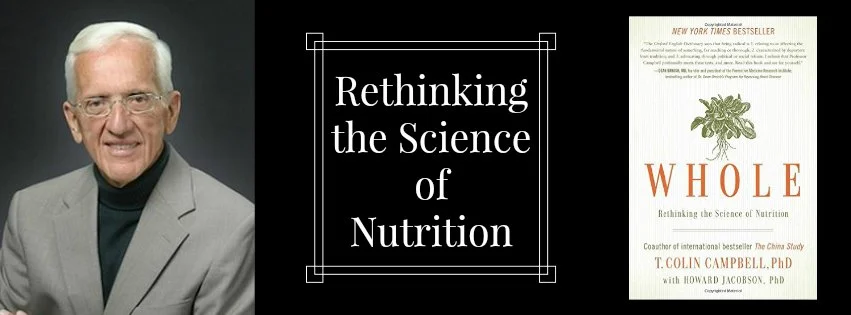
A Whole-Food Plant-Based Diet and Lifestyle - The Prescription for a Healthy World and Environment (41:50 min) Kirk's video overview of his interview with Dr. Campbell (3:41 min)   T. Colin Campbell, PhD is the author of the book “Whole: Rethinking the Science of Nutrition," (2013) and co-authored with his son, Thomas Campbell, MD the “The China Study” (2005). He was one of the co-investigators of the China Project started in the early 1980s, along with researchers from England and China, that studied 6500 subjects in 65 counties in rural China on the effects of diet and chronic disease (Outstanding summary videos of the China Project - a must watch!; Dr. Campbell's review of the China Project; Chinese Dietary Pattern 1980s) He is featured in the documentary, "Fork's Over Knives" and most recently a documentary directed by his son, Neslon Cambpell "Plant Pure Nation".

Dr. Campbell is the Jacob Gould Schurman Professor Emeritus of Nutritional Biochemistry at Cornell University and founder of The T. Colin Campbell Foundation, a non-profit organization that provides scientific health information to the public, without influence from industry or commercial interests. Dr. Campbell has more than seventy grant-years of peer-reviewed research funding and has authored more than 300 research papers. Dr. Campbell has also developed an extremely successful online E-Course at Cornell for professionals and the public at the T. Colin Campbell Center for Nutrition Studies (Plant-Based Nutrition Certificate).

Dr. Campbell was raised on a dairy farm and did his early research with a focus on showing that consuming animal protein from sources such as dairy foods was good for general health and would help prevent malnutrition in developing countries. His research from the China Project in the early 1980s and research at Cornell, including his early research on increased dairy protein in the diet increasing the risk to aflatoxin-induced liver cancer in Filipino children, challenged his core beliefs about the health benefits of consuming animal foods and led him to conduct research that allowed him to "turn on" cancer with the introduction higher levels of animal-based proteins (casein) and "turn off" cancer by reducing the amount protein or switching to plant-based proteins.

In his book "Whole: Rethinking the Science of Nutrition (2013)" he makes the case for the reductionistic approach to health and medicine being a failure by utilizing a drug or single nutrients to treat chronic diseases. Nutrition is a complexed interaction of thousands of chemicals and reactions in the body that can only be successfully treated with a whole food, plant-based diet rich in connected compounds that prevent and many times cure the chronic diseases of modern society (heart disease, diabetes, some cancers, etc.).

Dr. Campbell also shares his deep concern about lack of tenure for researchers and teachers atacademic institutions because of corporate influences on financing research and negative responses to research that does not support corporate business interests. He also shares his experience how the Kentucky State Legislature's voted down a proposal to study the healthbenefits of incorporating plant based nutrition into the community because of corporate influences which led to his son's, Nathan, documentary Plant-Pure Nation.

Dr. Campbell ends with a message of hope. His son Thomas Campbell, MD has become director of a nutrition education program for medical students at a major medical school. He son Nathan Campbell, with his establishment of PlantPureNation.com, the documentary Plant Pure Nation, the Plant Pure food service (Quick Start), as well as the development of Plant-Pure Pods  is successfully spreading the message of whole-food plant-based diets not only being ableto promote health and healing, but also being accepted by the general public, which is spreading the message of nutrition education on a grass roots level. He notes many creative ideas from professional colleagues and is especially heartened by the interest of physicians on the incorporating of whole-food plant-based nutrition to prevent and treat chronic diseases.

He is still extremely busy lecturing and teaching nationally and internationally speaking on the benefits of plant-based nutrition and remains passionate about this topic and sees no reason to slow down because his health and passion are high.

Be and Stay Well,

Kirk

You can call for "brief" medical questions 8-9 a.m. PST Monday-Friday   916-489-4400    KwikerMedical.com     StayingHealthyToday.com     Kirk's Healthy Living Tips
Kirk's FREE "21 Day Healthy Living Program"  Kirk's FREE "Heart Disease Reversal Program"


Fruits, Vegetables and Plant Protein are Good for Your Kidneys!

Every day patients say, "I need more protein"...more meat, eggs and dairy....It's a myth...
and harmful....kidney disease is the 9th leading cause of death in the U.S. and aggravated
by higher protein diets, especially animal proteins, but not so much plant proteins.....


"Fruits and Vegetables Improve Blood Pressure in Kidney Disease Patients

Kidney disease patients who increase their intake of fruits and vegetables can improve
their blood pressure, according to a study presented last week at the American Heart
Association's High Blood Pressure meeting in Orlando, Fla. Researchers followed the
diets of 108 kidney disease patients and monitored their blood pressure and medications.
The study divided the patients into three groups: one treated with sodium bicarbonate,
another with three to four daily servings of fruit and vegetables, and a control group.
Those who consumed more fruits and vegetables lowered their blood pressure,
compared with the other two groups, and lowered medications every year for the
five-year study. The reduction in medications saved the dietary intervention group and
estimated $80,000 in medication costs." Source: Physicians Committee for Responsible Medicine, "Breaking Medical News"  

Goraya N, Simoni J, Pruszynski J, Xiang P, Wesson D. Blood pressure control is better
and less expensive in chronic kidney disease when associated metabolic acidosis is
treated with fruits and vegetables rather than sodium bicarbonate. Report
at: the American Heart Association's High Blood Pressure meeting; September 15, 2016: Orlando, FL.

Be and Stay Well,

Kirk

You can call for "brief" medical questions 8-9 a.m. PST Monday-Friday   916-489-4400    KwikerMedical.com     StayingHealthyToday.com     Kirk's Healthy Living Tips
Kirk's FREE "21 Day Healthy Living Program"  Kirk's FREE "Heart Disease Reversal Program"


Does Sugar Feed Cancer? Yes and No!

A mantra that sugar feeds cancer is a mantra that is dangerous in my opinion because
the public takes it as not eating "carbs" and gives the OK to eating more fat, more protein
which can lead to more cancer. John McDougall, MD does an excellent job in putting this
concept into perspective
. If you have cancer eat more/only good carbs - whole grains that
you aren't sensitive to, beans/legumes, vegetables, fruits, nuts and seeds - in their whole state.  These
carbs that are UNprocessed are good for you.

Also, I JUDGE "experts and speakers" on how they look. If they preach health, no matter
what philosophy and don't look the part it turns me off....I believe their "facts" less.
Here is a video that helped get John McDougall, MD kicked out of speaking a speaking engagement at the Obesity in Medicine Conference because it was part of his slide show. The point
is pretty clear!  Video Worth Watching (2:08 min)


Be and Stay Well,

Kirk

You can call for "brief" medical questions 8-9 a.m. PST Monday-Friday   916-489-4400    KwikerMedical.com     StayingHealthyToday.com     Kirk's Healthy Living Tips
Kirk's FREE "21 Day Healthy Living Program"  Kirk's FREE "Heart Disease Reversal Program"
 

Non-Alcoholic Fatty Liver Disease - The Epidemic That Doesn't Have to Happen!

Non-alcoholic fatty liver disease (NAFLD) is increasing rapidly with the obesity and
diabetes mellitus epidemics. It is rapidly becoming the most common cause of liver
disease worldwide. NAFLD can progress to serious complications such as cirrhosis, liver
cancer and death
.

Individuals with NAFLD hav a higher risk of cardiovascular disease events (#1 killer
world-wide) than individuals without NAFLD
.  (Additional reference)  (See also my "Heart Disease Reversal" Resource Page )

A meta-analysis of 28 trials showed physical activity, independent from diet change,
was associated with a significant reduction in fatty liver content and in liver enzymes.
Individuals with increasing body mass index (weight) are more likely to benefit from
exercise
.

Resistance exercise improves NAFLD with less energy consumption than aerobic
exercise. Therefore resistance exercise may be more feasible than aerobic exercise
for NAFLD patients with poor cardiorespiratory fitness or for those who cannot
tolerate or participate in aerobic exercise
.

Low refined grain and red meat intakes, and high whole grain intake and adherence to
the Mediterranean diet style is associated with lower odds of the metabolic syndrome
in NAFLD patients
.

Summary for those with non-alcoholic fatty liver disease...

- Eat more fruit, vegetables and whole grains and eat less processed grains (baked
goods, chips, crackers, etc.), red meats and sugar added drinks.

- Do aerobic exercise daily (simply walking) and strength training (15 minutes of
 circuit training - 6 different arm exercises/6 leg exercises; 10-15 repetitions each -
without stopping between exercises).

This is a modern day condition (epidemic), like many, that need not exist with diet
change and exercise.

Be and Stay Well,

Kirk

You can call me for "brief" medical questions 8-9 a.m. PST Monday thru Friday 916-489-4400        KwikerMedical.com        StayingHealthyToday.com   HealthyLivingForBusyPeople.com

"Sign-Up for Kirk's "Healthy Living Tips" Here!


Foods to Eat for Breast Cancer Protection and If You Have Breast Cancer...

I had a breast cancer patient come in today and told her to eat a more whole-food plant-based diet. I should have emphasized eating the following plant foods and given her these links:

Mushrooms... Green tea... Whole soy foods...  and... more soy foods .... Broccoli... Flaxseed ground...  Eat more greens (& carrots)...  Fiber... Nuts... Vegetables...

Send this link to females you love and care about whether they are young or in the throws of breast cancer....

This doesn't cost much...Just chewing...

Be and Stay Well,

Kirk

You can call me for "brief" medical questions 8-9 a.m. PST Monday thru Friday 916-489-4400        KwikerMedical.com        StayingHealthyToday.com

"Sign-Up for Kirk's "Healthy Living Tips" Here!

The Power of Plants on Health and the Environment!

Been traveling a bit this September for conferences every single weekend...one more
to go....IV Vitamin C in Cancer and Sepsis in Kansas City this Friday and Saturday....

September 10 went to Montefiore Hospital, Bronx, NY to see how plant-based cardiologist
Dr. Ostfeld teaches his one day Cardiac Wellness Workshop
...I'm a bit crazy...just there for
the 4 hours of the work shop and came back same day...but it was worth it to see how
he taught a predominantly minority group (12 people) to reverse heart disease with a proven
plant-based diet. 

The next weekend was with 400 plus people at John McDougall, MDs 3 Day Intensive.
Very good speakers on atrial fibrillation and lifestyle, diet and heart disease, and diet and
chronic diseases. Fed 400 plus of us all plant based meals buffet style (no oil) and stuffed myself for breakfast lunch and dinner.  I wish people could experience how good the food tastes and how you really don't have to worry about the volume of food if it is 100% plant-based, unprocessed and without added oil. ....all of the lecturers who were on plant-based diets
were fit and trim... You can purchase this weekend on line & Weekend Recipes.

This past weekend (September 22-24) I was at the International Plant-Based Healthcare
Conference with 750 plus health professionals mostly. Some impressions....The plant-based
"movement" is really gaining momentum. You can feel it. The money is coming. This science is
overwhelming there of whole plant food diets reversing chronic disease, along with the
"perfect storm" of the healthcare crisis, and, the environmental crisis. The world consuming a whole-food plant-based diet is the fastest way to reverse chronic diseases and dramatically reduce green house gases and put the breaks on global warming. The protective effect of plant-based diets on the environment compared to the destructive effects of animal based diets may be the game changer.

...Also there was a contingent of 100 plus Kaiser health professionals. If they went back
to Kaiser as a collective force and got Kaiser to implement whole-food plant based
nutrition in mass, or even just to their cardiovascular patients, this would be a game-
changer. Medicine would change forever if Kaiser adopted this diet pattern as a main
therapy for all chronic disease patients (heart, diabetes, hypertension, obesity, bone
loss, Alzheimer's, etc.)...Even with all the "noise" about saturated fat being OK, grains are bad,
and everyone needing tons of olive oil, its very clear of the validity and necessity of the
world moving towards consumption of a more plant-based diet to save the planet and
our health. 

Check on my "Heart Disease Reversal" Resource Page....It is a work in progress. But
everything is on this one page to lead you to the reversal of your heart disease (and others)
with a whole-food plant based diet...IF YOU CHOOSE TO ACT! Will talk more about this
later.

You can also take my 21 Day Healthy Living Program for Busy People for FREE without
logging into the site
.....Just click on a video and watch, listen and read...

Lastly...This was a great 3 minute video on being happy shown to all 700 of us at the conference...Enjoy and Be Happy!

Be and Stay Well,

Kirk

You can call me for "brief" medical questions 8-9 a.m. PST Monday thru Friday 916-489-4400        KwikerMedical.com        StayingHealthyToday.com

"Sign-Up for Kirk's "Healthy Living Tips" Here!

Wiping Out Chronic Disease....Saving the Environment...One Dietary Pattern...

I am with 700 plus health professionals (including 100 from Kaiser) at the International
Plant-Based Health Care Conference (day 2 )
. The research of just one of the speakers, Dr. Dean Ornish,  famous for his heart disease reversal program since 1980s, represents the power of a whole food plant-based (WFPBD) diet on reversing chronic diseases from heart diseases, diabetes, obesity, aging, prostate cancer, etc. Scroll down this link and click on the different diseases to see research on WFPBD diet's benefit....and this is just one researcher.

If this Kaiser contingent can bring back and implement this dietary pattern at Kaiser to wipe out diabetes, obesity and heart disease....it's "Katie bar the doors" to real healthcare reform....

I am going to get some very high quality guests for my podcast show next month from
this. Until then eat more whole, unprocessed plant foods and less animal foods if you
want to reverse chronic diseases, save you and the government billions of $$$$, and
probably most importantly save our environment.

Be and Stay Well,

Kirk

You can call me for "brief" medical questions 8-9 a.m. PST Monday thru Friday 916-489-4400        KwikerMedical.com        StayingHealthyToday.com

"Sign-Up for Kirk's "Healthy Living Tips" Here!